Heavy-Duty Pin Coupling Selection Considerations addresses a common procurement and engineering gap: how torque range, shaft interface, service access and duty severity should be reviewed for larger drive trains. A defensible answer links the machine duty, both shaft ends and the published size data instead of choosing from appearance or a headline torque value. The GTC Elastic Sleeve Pin Coupling is used as a technical reference because its published family spans 105-2000, nominal torque 200 to 1,300,000 N·m, and allowable speed 10,000 to 550 r/min across the published size range. Those figures describe a family range; the selected size must still satisfy all relevant limits on the same model row.
Frame the heavy duty pin coupling decision
Selection work should start by writing the pass/fail conditions before comparing products. For heavy duty pin coupling, the principal decision is to use the real transmitted duty to screen the published torque range, then verify speed and interfaces on the same model row. This prevents a high headline rating from hiding a speed, bore, envelope or maintenance conflict.
The measurable interface for this topic includes shaft diameters, engagement lengths, hub envelope and the installation space around the higher-duty connection. Record those values before contacting suppliers when possible. If a value is not known, mark it as unknown and attach the shaft or machine drawing that can resolve it. An explicit open item is safer than an assumed dimension because a pin coupling family can offer multiple bore and shaft-hole combinations within one nominal frame size.
Use GTC Elastic Sleeve Pin Coupling as a technical reference
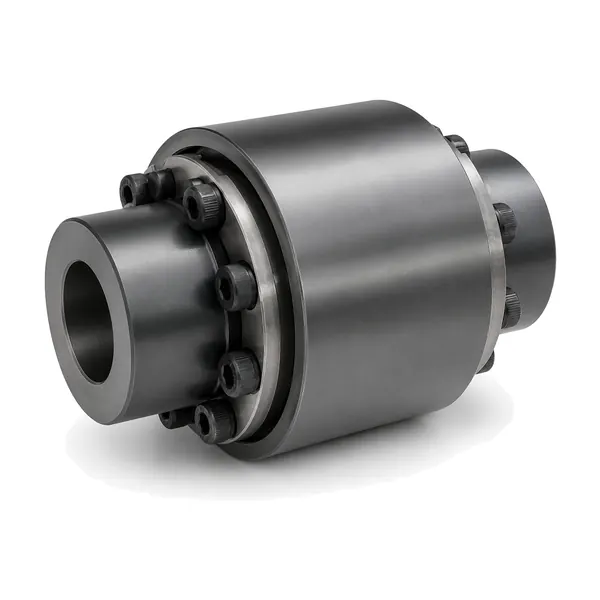
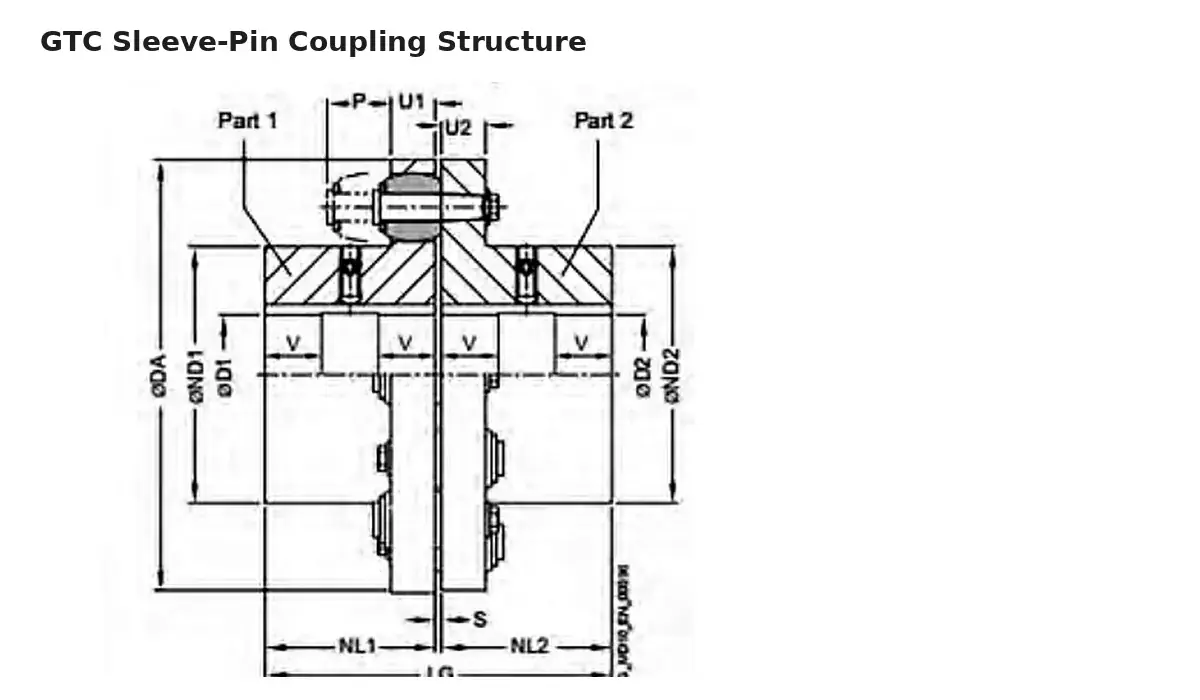
The GTC series uses an elastic sleeve pin arrangement in a larger heavy-duty family. The published technical data specifically describes it as suitable for high-speed and heavy-load duty, gives cement industry as an example, and notes that the elastomer can be replaced without moving the half-coupling.
For this guide, GTC Elastic Sleeve Pin Coupling provides a concrete reference point without implying that it is the automatic answer for every heavy duty pin coupling enquiry. Published data place the family at 200 to 1,300,000 N·m nominal torque and 10,000 to 550 r/min across the published size range allowable speed across 105-2000. The exact row also controls shaft-hole options and dimensional envelope. The GTC table contains multiple bore combinations for many sizes, so both shafts must be compared with the exact row rather than inferred from frame size alone.
Translate the topic into machine data
The operating review for heavy duty pin coupling should capture load changes, starts, process shock, reversing where relevant, dust or contamination, and the consequence of an unplanned stop. These conditions explain how the numerical operating point is reached and whether the drive sees repeated transients, process contamination, restricted access or braking interaction. Record the speed at the coupling itself; do not assume the value from a motor or downstream shaft if a gearbox changes speed between them.
| Input | What to record for this review |
|---|---|
| Drive location | Exact shaft-to-shaft connection in Pin Couplings for Mining and Bulk Material Handling or the actual machine. |
| Torque basis | Normal transmitted duty or the driver/driven data needed to establish it. |
| Speed | Operating r/min at the coupling, including any relevant operating range. |
| Shafts | Shaft diameters, engagement lengths, hub envelope and the installation space around the higher-duty connection. |
| Duty pattern | Load changes, starts, process shock, reversing where relevant, dust or contamination, and the consequence of an unplanned stop. |
| Maintenance | Access available for inspection, part replacement and re-alignment checks. |
Build a pass/fail matrix instead of ranking by one number
The first screen for heavy duty pin coupling is use the real transmitted duty to screen the published torque range, then verify speed and interfaces on the same model row. Put the required value in one column and the proposed model-row value in another. Repeat the check for speed, d1, d2, shaft-hole lengths and the envelope. A row either satisfies the known requirement or remains open; do not borrow torque from one size and bore capacity from another size to create an artificial match.
When an operating point is close to a published boundary, submit the complete duty instead of adding an undocumented correction factor. The equipment owner or responsible engineer may have project-specific service factors, starting requirements or transient-load information that are not visible from a web enquiry. Keeping those assumptions outside the public model table protects the distinction between published product data and a project design decision.

Resolve the constraint that is most likely to reject the candidate
For how torque range, shaft interface, service access and duty severity should be reviewed for larger drive trains, the rejecting constraint is often not the first value a buyer asks about. A high-torque model can still fail the job if allowable speed is too low or if the required bore/shaft-hole combination is unavailable. A physically compact model can still be unsuitable if maintenance access is blocked. Review the tightest constraint early, then confirm the remaining criteria before spending time on secondary commercial comparisons.
A useful engineering note explains why each alternative was rejected. Examples include bore not available in the required size, speed outside the published limit, brake wheel not compatible with the machine envelope, conical interface not matching the shaft drawing, or insufficient removal access. This record improves later procurement discussions because the shortlist is based on traceable machine constraints.
Heavy duty is a system description, not a torque number
The selection risk is usually not a missing product family; it is an incomplete description of the machine. A high torque value is only one part of a heavy-duty connection. Large shafts can control hub size; starting and shock events can control duty review; and restricted access can control whether a particular structure is serviceable. Before selecting a large frame, record the real shaft diameters and the axial/radial envelope so the coupling does not grow beyond the machine layout. Review how wear parts will be reached, because moving a large motor or gearbox for routine service can dominate lifecycle practicality even when the rating is adequate.
The working objective is how torque range, shaft interface, service access and duty severity should be reviewed for larger drive trains. Treat each measurement or operating observation as an input with a source: controlled drawing, machine nameplate, direct measurement or customer requirement. Conflicting values should be resolved before a bore or overall layout is released.
Focused checks for this decision
| Check | Why it matters |
|---|---|
| Duty severity | Describe normal torque, starts, shocks, reversing and any known overload/protection philosophy. |
| Shaft-driven size | Check whether bore demand, not torque alone, is setting the minimum frame. |
| Envelope | Confirm outside diameter, axial length, guard space and removal direction around the large connection. |
| Service strategy | Identify which components are expected to be inspected/replaced and whether access requires moving connected machinery. |
These checks are deliberately narrower than a generic coupling inspection. They are the items most likely to change the decision for heavy duty pin coupling. Once they are closed, the remaining general checks—torque, speed, both shafts, envelope, installation and maintenance access—can be reviewed without losing sight of the topic-specific risk.
A mistake to avoid
Do not choose the largest available family as a default safety margin. Oversizing can create speed, inertia, bore, space and maintenance consequences that must be reviewed with the machine design.
If the required information is unavailable, mark it as confirmation required in the enquiry and ask for the drawing, measurement or operating record that can resolve it. A transparent open item is preferable to an apparently complete selection built on an assumption.
What the technical handoff should contain
A heavy-duty RFQ should explain why the duty is considered severe and provide the shaft/envelope drawing. Engineering can then distinguish rating-driven size from interface-driven size and keep the recommendation traceable.
Keep the handoff concise enough that engineering, purchasing and maintenance can all identify the same proposed configuration. Include the coupling designation only after the duty and interface information are aligned; this prevents the product name from becoming a substitute for the machine requirements.
Installation and verification consequences
Whatever conclusion is reached for heavy duty pin coupling, verify the installed connection against the approved configuration. Confirm hub positions, shaft engagement, fasteners, pins, sleeves or elastic elements, retainers and any brake-wheel components. Check that the rotating envelope clears the guard and that the connected machines are aligned to the applicable machine/project requirements. After initial operation, compare visible condition, noise and vibration with the commissioning baseline.
Procurement decision record
For heavy duty pin coupling, a defensible quotation should name the proposed series and size, state the shaft-hole arrangement used for the proposal and identify any dimensions still requiring confirmation. Start with the GTC Elastic Sleeve Pin Coupling page, use the selection workflow for the technical inputs, and review the application selection page for the related duty questions. Keep the three resources in that order: product facts, selection logic, then application context.
Frequently asked questions
What is the first data point to confirm for heavy duty pin coupling?
Start with the actual drive location and the machine input that controls the topic. For this guide that means use the real transmitted duty to screen the published torque range, then verify speed and interfaces on the same model row.
Can a family range be used as a final model approval?
No. The family range is a screening tool. Torque, speed, shaft-hole options and dimensions must be checked on the exact proposed size.
Is a product photo enough for replacement selection?
No. A photo helps identify structure, but the replacement still needs both shaft interfaces, the machine envelope and the existing drawing or controlled measurements.
How should missing information be handled?
Mark the item as open and send the drawing or machine data that can resolve it. Do not fill an RFQ with assumed dimensions or unsupported performance values.
What should be confirmed before order release?
Confirm the proposed series/size, both shaft interfaces, any brake-wheel or taper geometry, drawing revision, quantity and order-specific material or inspection requirements.
Prepare the RFQ
Use the form below for heavy duty pin coupling. Send the duty data and drawing together so the proposed model can be checked against one coherent set of machine inputs rather than a collection of assumptions.
Decision record and release checks
Operating conditions can change the preferred configuration even when the steady running point appears simple. For Heavy-Duty Pin Coupling Selection Considerations, review load changes, starts, process shock, reversing where relevant, dust or contamination, and the consequence of an unplanned stop. These observations belong next to the numerical duty because they explain whether the coupling is being asked to absorb routine transient behaviour or compensate for a machine problem that should be corrected elsewhere. A flexible pin coupling can accommodate limited relative movement by design, but it should not be used as a substitute for a sound base, correct shaft condition or proper alignment of the connected machines.
Inspection planning for Heavy-Duty Pin Coupling Selection Considerations should concentrate on hub and pin interfaces, fasteners, reference faces, elastic components and signs of uneven loading. The inspection record should identify the drawing or approved configuration being checked and separate dimensional acceptance from optional commercial documentation. If a project asks for a specific material, treatment, inspection report or certificate, place that requirement on the RFQ and quotation before production release. Do not infer it from a similar model name or from a product photo.
Maintenance planning for Heavy-Duty Pin Coupling Selection Considerations should preserve inspection access for wear parts and a clear method to distinguish coupling wear from a driver, shaft or driven-machine problem. Establish a baseline after installation and compare later inspections with that condition. Changes such as loosened fasteners, displaced retainers, abnormal elastic-element wear, brake-surface issues where applicable, or new vibration should trigger a drive-train review rather than an automatic assumption that the coupling alone caused the symptom. Correcting the surrounding cause is as important as replacing a visibly worn part.
Procurement handoff for Heavy-Duty Pin Coupling Selection Considerations is strongest when the quotation and drawing use the same model designation, shaft configuration and open-item list. Purchasing can then compare offers on the basis of the same duty and interface information instead of comparing only a family name. Before order release, confirm quantity, required drawing approval, any project-specific documentation, and which dimensions remain customer-confirmed. This keeps technical acceptance separate from commercial terms such as delivery schedule or packaging, which should be agreed for the actual order.
Commissioning closes the selection loop for Heavy-Duty Pin Coupling Selection Considerations. Before the guard is closed, verify hub position, shaft engagement, fasteners, pins, sleeves or other elastic components, brake hardware where applicable, and the free rotating envelope. Rotate or jog the train only under the machine owner’s approved procedure. After initial operation, recheck visible joints and compare noise or vibration with the commissioning baseline. If the condition changes, inspect the driver, coupling, shafts and driven machine as one system.
For Heavy-Duty Pin Coupling Selection Considerations, the practical decision is to use the real transmitted duty to screen the published torque range, then verify speed and interfaces on the same model row. Treat every headline family range as a screening boundary rather than a finished design. The final proposal should point to one specific size and show that its published torque, allowable speed and shaft options all correspond to the same row. If any of those inputs are missing, keep the item open in the RFQ instead of substituting an assumed value. This makes the engineering record easier to review later because the reason for choosing the configuration is visible from the duty data and the drawing.
| Review item | Project-specific check |
|---|---|
| Selection basis | Use the real transmitted duty to screen the published torque range, then verify speed and interfaces on the same model row. |
| Interface record | Shaft diameters, engagement lengths, hub envelope and the installation space around the higher-duty connection. |
| Operating review | Load changes, starts, process shock, reversing where relevant, dust or contamination, and the consequence of an unplanned stop. |
| Inspection focus | Hub and pin interfaces, fasteners, reference faces, elastic components and signs of uneven loading. |
| Maintenance access | Inspection access for wear parts and a clear method to distinguish coupling wear from a driver, shaft or driven-machine problem. |