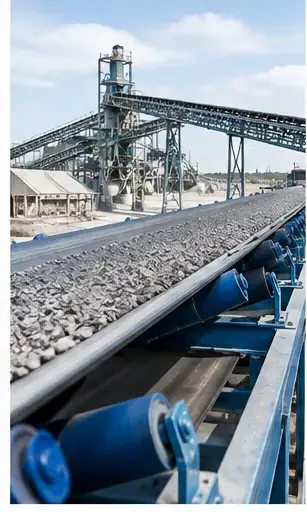
Pin Couplings for Industrial Conveyor Drives should be approached as a drive-selection problem, not as a search for a generic industry label. The relevant context is motor-to-gearbox and gearbox-to-driven-shaft conveyor connections where alignment, start-up shock and maintenance access matter. Conveyor drive selection should distinguish motor-side and driven-side connections, because speed, torque, shaft size and service access can differ across the same drive train. A defensible choice therefore starts with the machine duty and ends with a specific model row whose torque, speed and shaft interface all fit.
Where the coupling sits in the drive
Identify the actual connection before choosing a family: motor to gearbox, gearbox to driven shaft, brake-wheel location, or another shaft-to-shaft interface. Record the rotating speed at the coupling itself rather than assuming it is the same as another shaft in the machine. Note whether the coupling is accessible after guards are installed and whether a planned maintenance stop allows the elastic elements or pins to be reached without moving major equipment.
Operating conditions to record
- Normal transmitted torque or the driver and driven-machine data needed to determine it.
- Operating speed at the coupling, start/stop frequency and any reversing or braking behavior.
- Both shaft diameters, shaft-hole lengths, key or taper details and available axial space.
- Dust, moisture, corrosion exposure, temperature and any cleaning or process conditions relevant to the machine.
- Inspection access, replacement access and the consequence of an unplanned stop.
These inputs are more useful than a broad label such as heavy duty. They allow the candidate series to be checked against published limits while keeping unsupported safety factors, materials or life claims out of the selection.
Candidate pin coupling families
| Series | Published nominal torque range | Published allowable speed range | Why it may be considered |
|---|---|---|---|
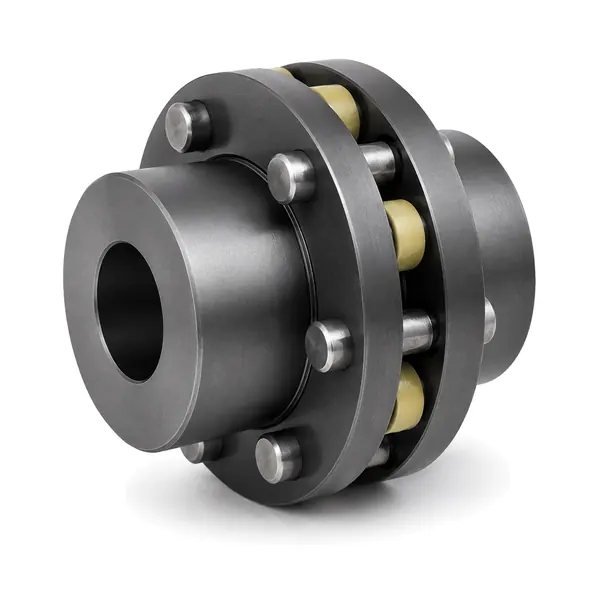
| HC Elastic Pin Coupling | 250 to 180,000 N·m | 8,500 to 950 r/min across the published size range | standard elastic pin arrangement with MC nylon elastic elements |
| TC Elastic Sleeve Pin Coupling | 16 to 22,400 N·m | 8,800 to 1,150 r/min across the published size range | elastic sleeve around each pin for compliant torque transfer |
| GTC Elastic Sleeve Pin Coupling | 200 to 1,300,000 N·m | 10,000 to 550 r/min across the published size range | large-range elastic sleeve pin family with service-friendly elastomer replacement |
Candidate does not mean automatically suitable. The exact size and shaft-hole combination must be confirmed from the exact published model row and the project drawing.
Integration and safety checks
Review the full drive train before final release. Confirm that the coupling can be installed without forcing the shafts, that the connected machines can be aligned, that the rotating envelope clears the guard and adjacent structure, and that any brake wheel is positioned correctly relative to its brake hardware. If the machine has significant process shock, reversing or frequent starts, describe that duty explicitly rather than assuming the published nominal torque captures the whole load case.
Maintenance implications
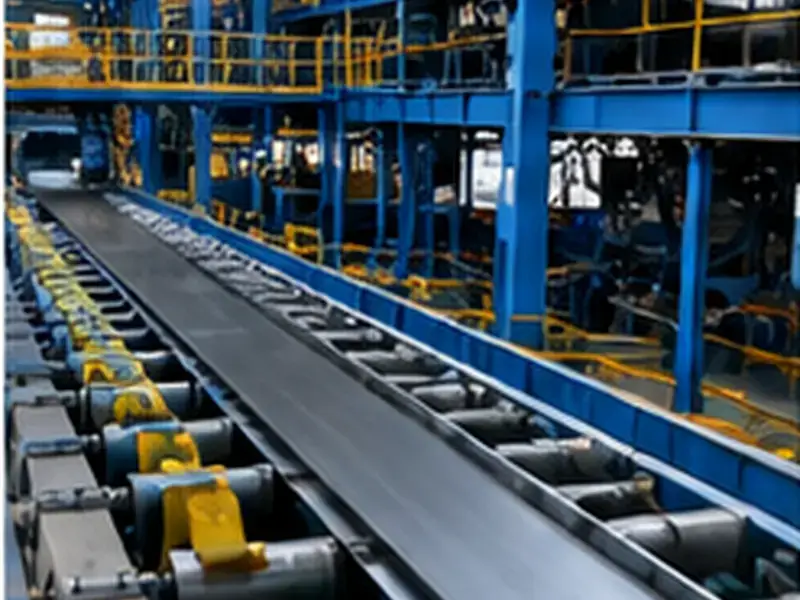
Maintenance planning should make the expected inspection points visible and accessible. Pins, elastic elements or sleeves, retainers, bolts and brake-wheel interfaces should be checked for looseness, wear, deformation or displacement. If wear is uneven, investigate alignment and the surrounding machine condition as well as replacing parts. No single maintenance interval applies to every machine. Set the inspection interval from the project duty, operating environment and observed condition.
RFQ preparation
For this duty, start with the HC Elastic Pin Coupling only as a candidate and use the pin coupling selection workflow to compile the inputs. Send the driven-equipment description, torque or drive data, speed, both shafts, available space, quantity and a drawing. The final quotation should identify the proposed size and the exact shaft-hole arrangement.
Decision record and release checks
Inspection planning for Pin Couplings for Industrial Conveyor Drives should concentrate on hub seating, fasteners, pin or sleeve wear, alignment references and the condition of surrounding drive components. The inspection record should identify the drawing or approved configuration being checked and separate dimensional acceptance from optional commercial documentation. If a project asks for a specific material, treatment, inspection report or certificate, place that requirement on the RFQ and quotation before production release. Do not infer it from a similar model name or from a product photo.
Maintenance planning for Pin Couplings for Industrial Conveyor Drives should preserve access that permits routine visual inspection without removing unrelated conveyor structure. Establish a baseline after installation and compare later inspections with that condition. Changes such as loosened fasteners, displaced retainers, abnormal elastic-element wear, brake-surface issues where applicable, or new vibration should trigger a drive-train review rather than an automatic assumption that the coupling alone caused the symptom. Correcting the surrounding cause is as important as replacing a visibly worn part.
Procurement handoff for Pin Couplings for Industrial Conveyor Drives is strongest when the quotation and drawing use the same model designation, shaft configuration and open-item list. Purchasing can then compare offers on the basis of the same duty and interface information instead of comparing only a family name. Before order release, confirm quantity, required drawing approval, any project-specific documentation, and which dimensions remain customer-confirmed. This keeps technical acceptance separate from commercial terms such as delivery schedule or packaging, which should be agreed for the actual order.
Commissioning closes the selection loop for Pin Couplings for Industrial Conveyor Drives. Before the guard is closed, verify hub position, shaft engagement, fasteners, pins, sleeves or other elastic components, brake hardware where applicable, and the free rotating envelope. Rotate or jog the train only under the machine owner’s approved procedure. After initial operation, recheck visible joints and compare noise or vibration with the commissioning baseline. If the condition changes, inspect the driver, coupling, shafts and driven machine as one system.
For Pin Couplings for Industrial Conveyor Drives, the practical decision is to identify the exact motor-to-gearbox or gearbox-to-driven-shaft connection, then match torque, speed and both shaft ends. Treat every headline family range as a screening boundary rather than a finished design. The final proposal should point to one specific size and show that its published torque, allowable speed and shaft options all correspond to the same row. If any of those inputs are missing, keep the item open in the RFQ instead of substituting an assumed value. This makes the engineering record easier to review later because the reason for choosing the configuration is visible from the duty data and the drawing.
| Review item | Project-specific check |
|---|---|
| Selection basis | Identify the exact motor-to-gearbox or gearbox-to-driven-shaft connection, then match torque, speed and both shaft ends. |
| Interface record | Motor or gearbox shaft diameter, driven-side shaft diameter, usable lengths, guard space and removal direction. |
| Operating review | Start/stop frequency, loaded starts, reversing where present, dust and the consequences of a conveyor stoppage. |
| Inspection focus | Hub seating, fasteners, pin or sleeve wear, alignment references and the condition of surrounding drive components. |
| Maintenance access | Access that permits routine visual inspection without removing unrelated conveyor structure. |